Architecture & Engineering Guide
Platform architecture
Four independently deployable systems form one salon operating platform: customers book through the public web, operators manage the fleet, stores keep working offline, and cloud services coordinate data, identity, and delivery.
4Deployable systems
7Booking wizard states
67POS SQLite tables
.NET 10Cloud service platform
Architecture At A Glance
Customer web
Operations
Store runtime
Cloud services
Data and delivery
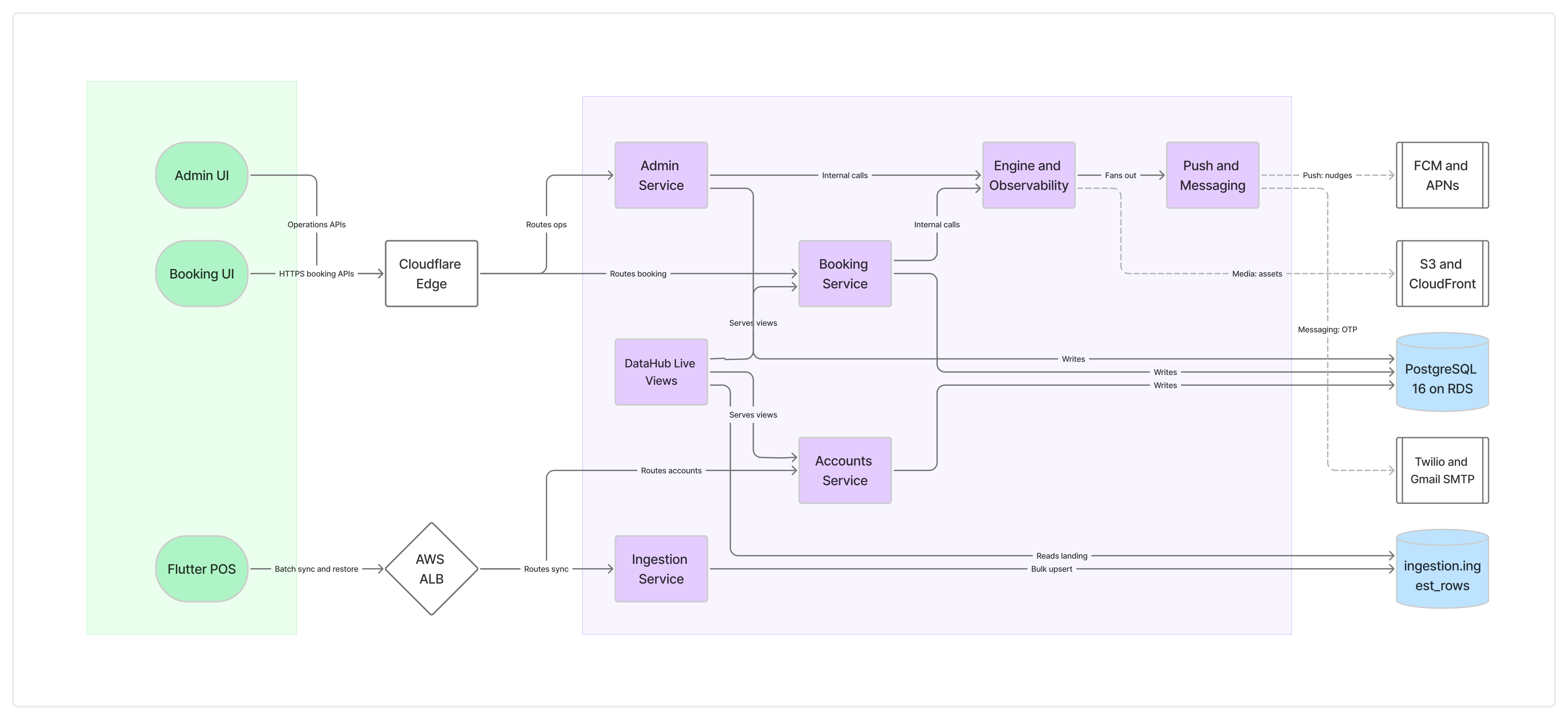
Core boundary: each cloud service owns its PostgreSQL schema. DataHub is the only blessed cross-schema read substrate, while the POS Primary remains the only full local-database owner.
Explore The Systems
Customer Experience
Consumer Booking
Discovery → hold → OTP → booking → management
Operations
Admin Console
RBAC, stores, devices, fleet health, tasks, diagnostics
Store Runtime
Offline-first POS
Primary/secondary roles, SQLite, outbox, restore, sync
Platform Services
Cloud Microservices
Ingress, service mesh, data platform, push, messaging
Architectural Principles
Offline-first at the storePrimary POS owns the full SQLite database. Secondary devices call the Primary Shelf API, and emergency writes replay after reconnection.
Explicit service ownershipCloud services isolate their schemas and communicate through APIs, ingestion projections, and DataHub views instead of direct cross-schema queries.
Defense in depthOTP and RBAC protect operations, while store LAN traffic uses TLS pinning, Ed25519 signatures, and device identity.
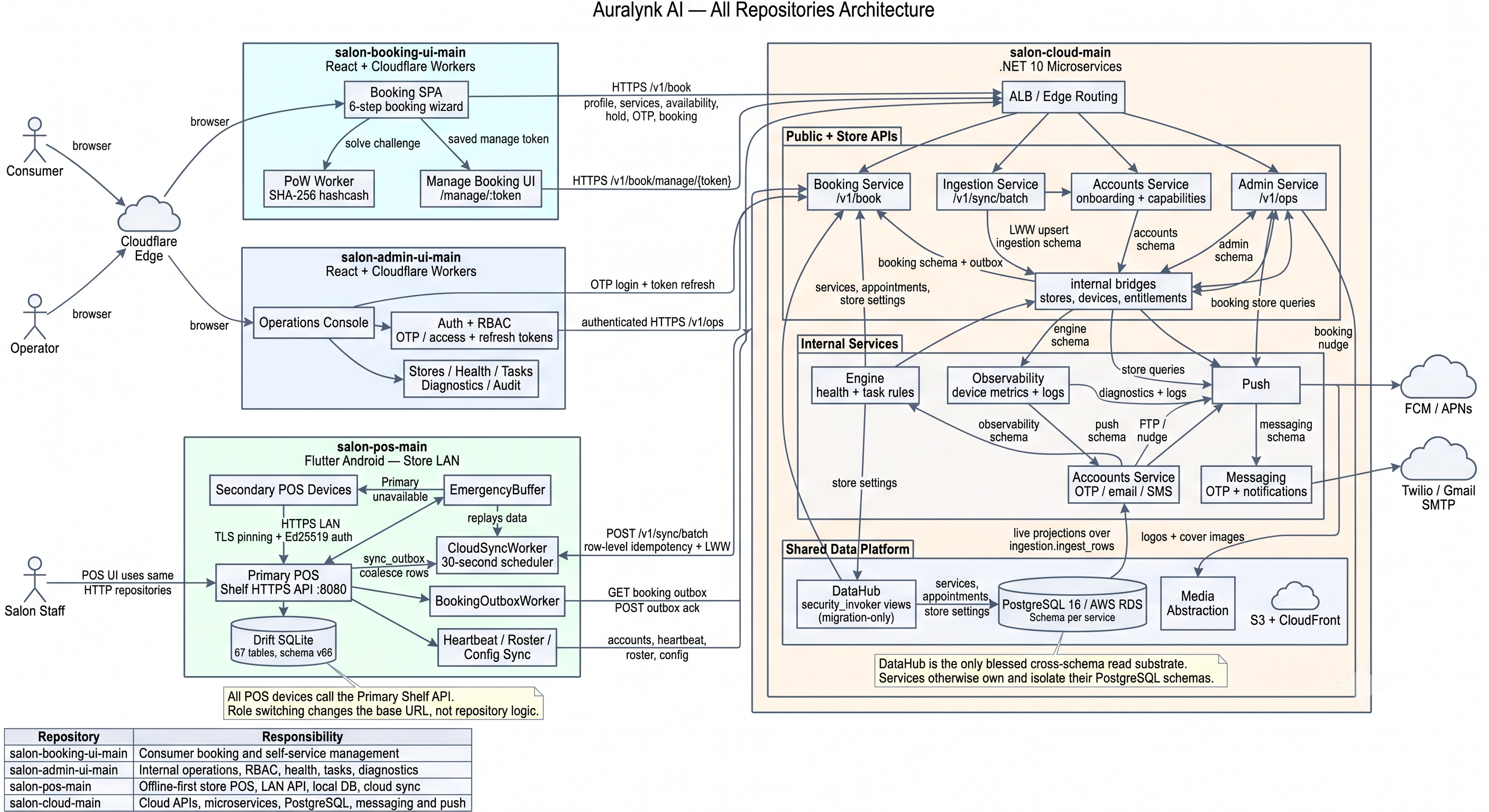
Open the detailed all-repositories reference image